
Evaluation and Certification of Solid-State Transformers
01 Jun 2026
Ensuring Safety, Reliability, and Interoperability
In recent years as power generation and conversion technology rapidly evolves, solid-state transformers (SSTs) are emerging as a significant advancement in power conversion technology, offering a modern alternative to traditional electromagnetic transformers. They incorporate wide-bandgap semiconductors such SiC or GaN, high-frequency (HF) transformers, and advanced control systems. SSTs offer improved efficiency, flexibility, and integration with renewable energy sources. However, with innovation comes the need for evaluation and certification to ensure safety, reliability, and interoperability.
This blog introduces the key aspects of solid-state transformer certification, explains its importance in modern power systems, and highlights how ETL certification fits within the broader compliance and regulatory landscape.
What is a Solid-State Transformer?
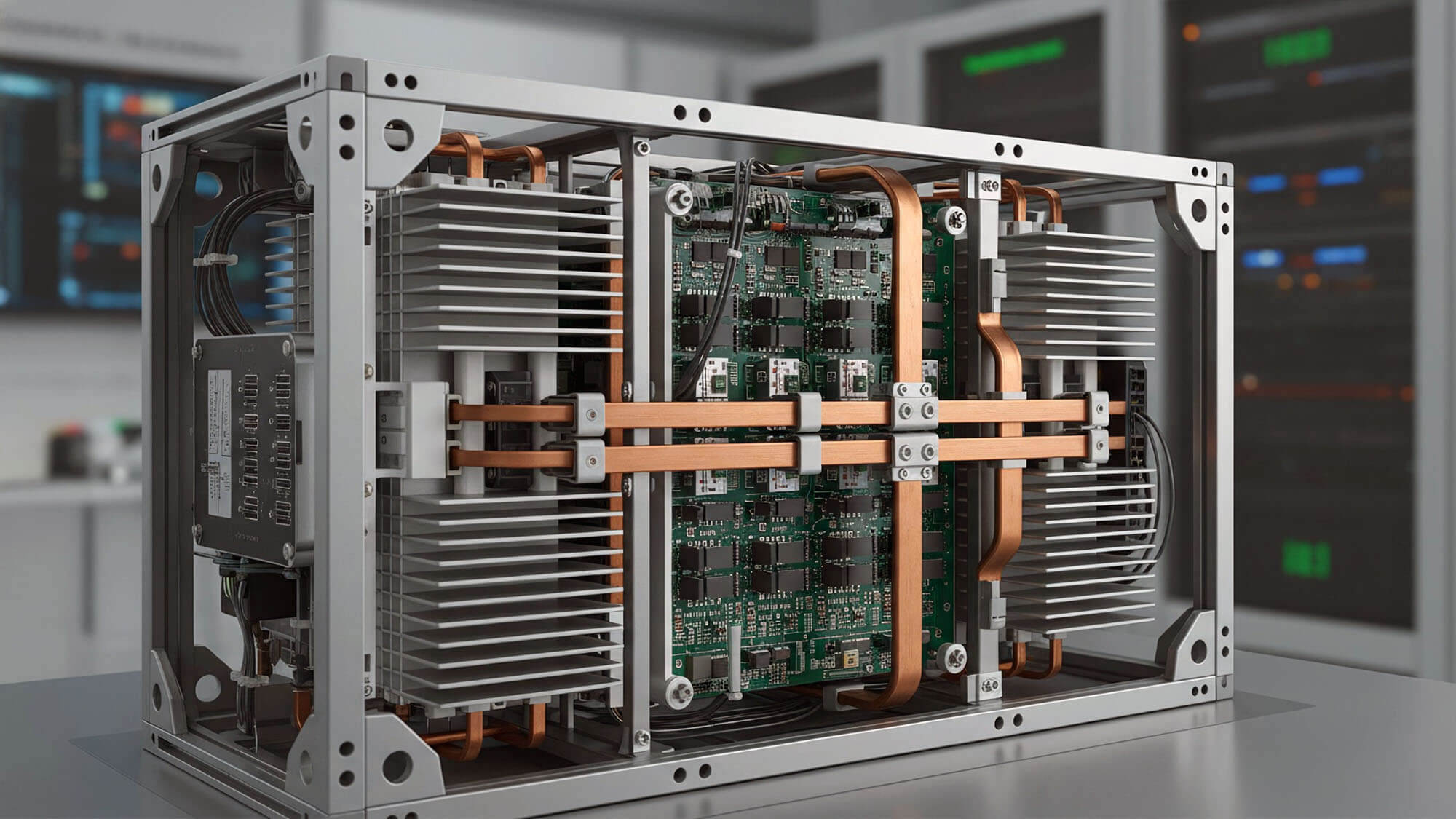
Although it’s referred to as a solid-state transformer, it is fundamentally a power conversion system based on power electronics components. It typically consists of multiple stages, including an AC–DC rectifier, a high-frequency DC–DC converter with an isolation transformer, and a DC–AC inverter. Unlike conventional transformers, SSTs provide important advantages, including:
- Compact size and lighter weight
- Advanced voltage regulation and power quality control
- Smart grid integration with interactive control
- Easy integration seamlessly with renewable energy
- Flexible and multifunctional
These capabilities make SSTs particularly valuable in data centers, smart grid, electric vehicle (EV) charging infrastructure, renewable energy systems, and more.
Why Certification is Critical
Certification ensures that SSTs meet established safety, performance, and compliance standards before deployment. Given their complexity, SSTs must be evaluated across multiple domains. A Nationally Recognized Testing Laboratory (NRTL) recognized by Occupational Safety and Health Administration (OSHA), like Intertek ETL, can help accelerate SSTs certification, ensuring safety and compliance with industry standards.
1. Safety Assessment
SSTs operate at high voltages and frequencies. Certification verifies protection against:
- General construction requirements
- Electrical hazards
- Thermal and risk of fire
- Risk of mechanical hazards
- Power quality requirements
- Risk analysis/Functional safety
- Markings and manuals
SSTs are comprised of multiple components that form or operate at a system level. It integrates different components and technologies including high voltage, high power, and complex power electronics. Failure in such systems can have serious consequences.
2. Grid Compatibility
SSTs must interact reliably with existing grid infrastructure. Certification ensures:
- Interconnection
- Interoperability
- Power quality
Grid codes are technical requirements set by grid operators to regulate the connection and interaction of power-generating equipment with the electricity grid. These requirements ensure that systems can operate reliably, withstand faults, and support grid stability. Compliance with grid codes is crucial for equipment manufacturers and operators seeking to connect their devices to national or regional grids.
3. Performance Validation
Performance testing for SSTs focuses on verifying how efficiently, reliably, and accurately it converts and controls power under different operating conditions.
Ultimately, adherence to national and international standards is key to achieving market access and deployment.
Key Standards and Frameworks
While SSTs standards are still evolving, certification generally relies on established frameworks for power electronics and transformer systems.
UL 1741, together with IEEE 1547 and IEEE 1547.1, addresses the power conversion stage, grid interconnection and interoperability. Medium-voltage (MV) considerations (i.e., above 1000 Vac or 1500 Vdc) were incorporated through revisions to UL 1741, with more explicit requirements formalized in later updates.
UL 2877 and UL 347A apply to power conversion equipment with input voltages above 1000 V, up to 38 kV, and output voltages up to 38 kV. For applications outside North America, IEC 62477-2 covers converters from 1000 Vac or 1500 Vdc up to 36 kV AC or 54 kV DC.
The high-frequency (HF) transformer within the SST is evaluated in accordance with applicable transformer standards, with UL 1562 being one of the potential references. The electrical insulation system (EIS) is a critical element in ensuring reliable operation within specified thermal, electrical, and environmental limits, particularly when insulation systems above Class A are required.
Additional applicable standards including those related to protective parts, electromagnetic compatibility (EMC), and cybersecurity should be identified and applied based on the specific SST design, topology, and end-use application.
Manufacturers typically need to demonstrate compliance with a combination of these standards, appropriately adapted to the specific architecture and operating characteristics of SST systems.
Why Certification Matters for SSTs
Certification is particularly valuable for solid-state transformers because:
- SSTs integrate multiple subsystems (power electronics, control systems, and transformer elements), which increases overall safety and compliance complexity
- Authorities Having Jurisdiction (AHJs) commonly require listing by a Nationally Recognized Testing Laboratory (NRTL), such as Intertek ETL
- It provides third-party assurance that supports confidence among utilities, regulators, and end users
Certification, like the ETL Mark from Intertek, can serve as a market entry requirement for deployment in North America.
Conclusion
Currently there is no single and fully dedicated standard specifically addressing SSTs. As a result, system boundaries must be carefully defined to determine what constitutes the certifiable unit – whether it is the power electronic converter, the transformer subsystem, or the integrated system as a whole.
Grid code testing is typically performed at the medium-voltage level, and in some cases, simulation-based validation methods may be used to support the type testing, depending on the application and certification approach.
Despite these challenges, early engagement with a certification body such as Intertek can significantly streamline the process. It helps manufacturers align product architecture with applicable standards from the outset, conduct pre-compliance and internal validation testing prior to formal submission, and establish robust technical documentation and traceability throughout the design and development lifecycle.

You may be interested in...
Power Transmission and Distribution Equipment
Powerful testing, certification and advisory solutions for the grid-connected experience and related equipment.